
Pelvic Care Blog
Our blog is dedicated to supporting acupuncturists who specialize or hope to specialize in pelvic health. We hope you enjoy our musings and offerings.
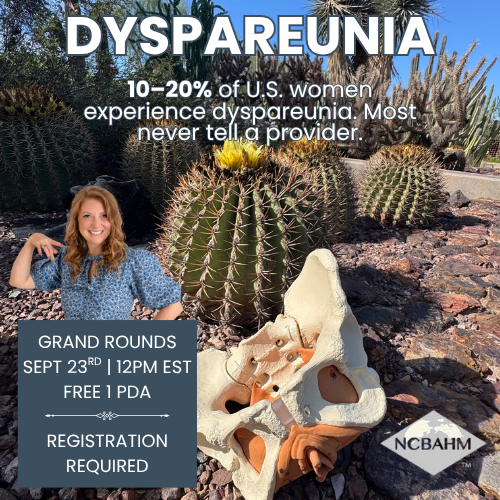
Pain With Sex Is Not Rare. It's Just Rarely Spoken.
This Wednesday, September 23rd at 12pm EST, I'm teaching a free Grand Rounds session on Dyspareunia. We'll cover the differential, the red flags that require referral, the TCM patterns most commonly seen, point protocols backed by current research, and the intake questions that make room for the sentence a client has been avoiding.

Can Acupuncture Actually Change Hormone Levels During Perimenopause?
Researchers pooled 36 randomized controlled trials and 1,480 perimenopausal women, comparing acupoint application, abdominal moxibustion, needle based acupuncture therapy and compression acupuncture against control for their effect on estradiol, FSH and LH.
Which Fertility Patients Actually Seek Out Acupuncture During IVF
Women with a history of recurrent pregnancy loss are more than twice as likely to seek out acupuncture during a frozen embryo transfer than women without that history. Women who have already failed three or more rounds of IVF are nearly twice as likely. These are the findings of a 2026 retrospective study from University Hospitals Cleveland, published in F S Reports, that looked at 799 women undergoing frozen embryo transfer and tracked who chose to add acupuncture and Chinese medicine to their care, and who did not.
Trauma Informed Care in Pelvic Acupuncture
In 2006, Pallavi Latthe and her colleagues at the University of Birmingham published a systematic review in the BMJ that pooled data from 122 studies and over 94,000 women. They were trying to understand what predisposes women to chronic pelvic pain.
pelvic Acupuncture Pricing
Most of the acupuncturists I know undercharge. Not by a little. By a lot. We undercharge in a way that no one in our profession quite says out loud, and we undercharge for reasons that are tangled up in our own relationship with money, our training, our gender, the cultural framing of our medicine and the belief that asking for money is at odds with being a healer. This belief lives in YOUR body. It shows up as the slight pause before quoting a price, the apology built into the sentence, the discount offered before it is asked for.

Why Do Some Postpartum Depression Patients Respond to Acupuncture and Others Don't?
A 2023 clinical trial out of Shenzhen followed 96 postpartum depression patients through 8 weeks of acupuncture and found something worth sitting with. The symptom improvement was real and clinically meaningful, a mean reduction of 5.31 points on the Hamilton Depression Rating Scale, well past the accepted threshold for a clinically important change.
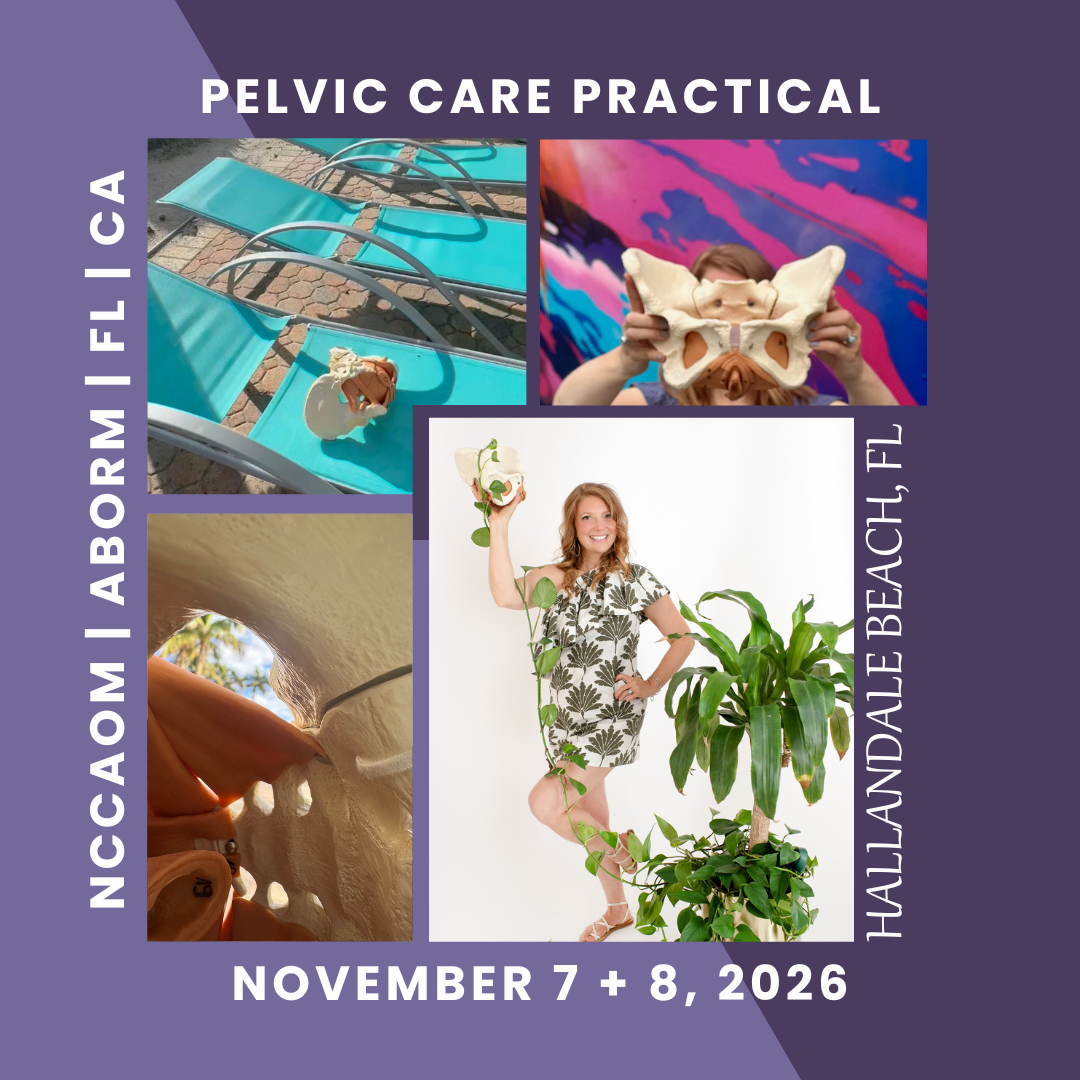
The Last Practical of 2026 Has Four Seats Left
Seattle sold out. AND Both Montreal dates sold out.
48 acupuncturists said yes to closing the gap in pelvic care this fall, fast enough that I had to close registration early on both coasts. I am sitting with real gratitude this week. Every one of those seats is a practitioner who is about to walk back into clinic with real time needle guidance for pelvic floor dysfunction, hands on palpation training and the confidence to use it Monday morning.

Three Mini Courses This Week Break Down Damp Heat Into What It Actually Is
Damp heat is a single TCM diagnostic name that actually covers three distinct clinical problems, discharge conditions, viral latency conditions and structural mass forming conditions, and most acupuncturists were taught to treat them all the same way. Next week The Pelvic Acu is teaching all three separately, live, free for the first 72 hours after each session.
A new double blind RCT just published in The Journal of Pain
A new double blind, placebo controlled RCT on acupuncture for vulvodynia was just published in The Journal of Pain. It is the first multi needle, multi session, double blind acupuncture trial ever conducted for this condition. The lead investigator, Dr. Judith Schlaeger at University of Illinois Chicago, partnered with Dr. Ted Kaptchuk at Harvard's Program in Placebo Studies and Dr. Nobuari Takakura in Japan, whose lab developed the only validated double blind acupuncture needles in existence.

Acupuncture for Overactive Bladder in Postmenopausal Women
If you've been treating pelvic health conditions for any length of time, you'll know that overactive bladder (OAB) is one of those issues that quietly dominates your patient caseload. Symptoms like urgency, frequency, waking multiple times a night might not make headlines, but they significantly erode quality of life for the women experiencing them. And for postmenopausal women in particular, the burden is disproportionate.

Why Pelvic Health Needs a Voice: My Conversation on Her Voice Shines
Dr. Krystal Couture joins Her Voice Shines to talk pelvic health, the care gap her clients fell into and why this work finally deserves a voice. Listen in.
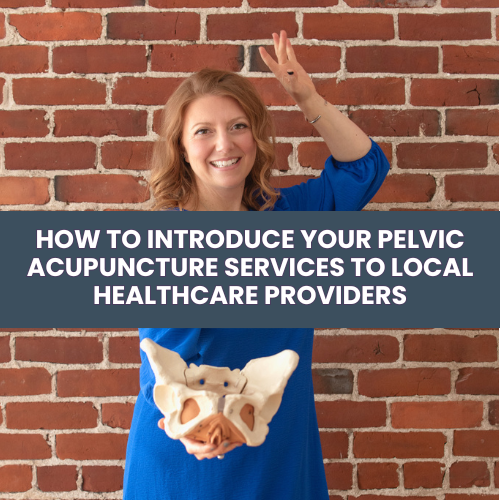
How to Introduce Your Pelvic Acupuncture Services to Local Healthcare Providers
How do you actually get on the radar of the providers in your community? Not just the pelvic PTs. The OB/GYNs, urogynecologists, REIs, urologists, oncologists, midwives, doulas and pelvic chiropractors who are seeing the same clients you want to serve.

PCOS Is Now PMOS. And Honestly? It's About Time.
Something landed in my inbox this morning that stopped me mid sip of tea. PCOS has been officially renamed. As of today, the condition that one in eight women carry, that more than 170 million women worldwide are navigating, is no longer called Polycystic Ovary Syndrome. It is now Polyendocrine Metabolic Ovarian Syndrome. PMOS.
Endometriosis Acupuncture Point Protocols
Endometriosis is marked by active endometrial tissue growing outside the uterus. Endometriosis can impact the ovaries, uterine walls, fallopian tubes, ureters, bladder, vaginal wall, rectum, colon and even abdominal scar tissue. 10% of those assigned female at birth were diagnosed by laparoscopy with endometriosis
PCOS Acupuncture Protocols
Polycystic ovary syndrome (PCOS) is an endocrine diseases in those assigned female at birth in menstruating years with a global prevalence of 4-12% (Chen et al., 2023). PCOS affects reproductive health, metabolism, and mental health with symptoms that include: irregular menstruation, acne, thinning hair on the scalp, hirsutism (excess facial, chest and back hair), ovulation dysfunction infertility, polycystic ovaries, insulin resistance, weight gain and pelvic pain.